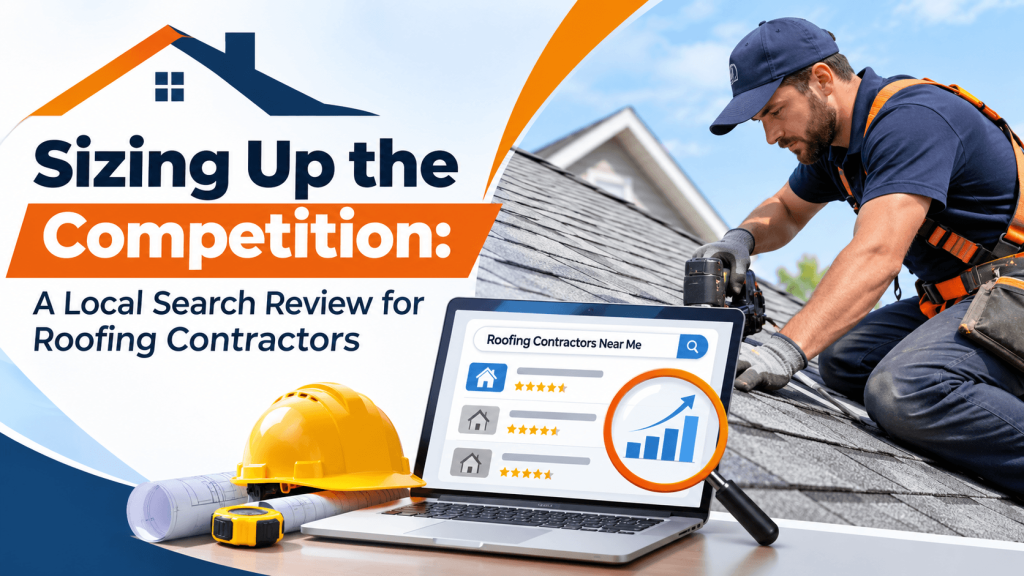
After a hailstorm rolls through Oklahoma City, dozens of roofing companies suddenly compete for the same homeowners. Some are long-established local firms. Others are out-of-town crews that arrive with the storm. If you’ve run a roofing business for years and still feel invisible online after weather events, the answer often starts with a closer look at who homeowners are finding instead of you.
A simple competition review doesn’t require expensive tools. It takes an afternoon, a spreadsheet, and an honest eye.
Search the Way Your Customers Do
Open a private browser window and search the phrases a homeowner would use: roof repair near me, roof replacement plus your city, or storm damage roofer. Note which companies appear in the map results, the regular results, and any AI-generated summaries. Search from a few different neighborhoods if you can, since local results change with location.
Write down the five or six names that keep showing up. Those are your real online competitors, and they may not match the companies you bid against most often.
Compare What Homeowners See
For each competitor, record what a homeowner would notice:
- Number and recency of reviews, and whether the owner responds
- Completeness of their Google Business Profile, including photos of finished jobs
- Services listed, such as insurance claim help, metal roofing, or gutters
- Whether their name, address, and phone number match across the sites where they appear
Then score your own business the same way. A roofer with excellent work but only a handful of reviews from 2021 and no project photos is easy to overlook next to a competitor that posts new photos every month.
Turn the Gaps Into a Short Action List
The goal isn’t to copy competitors. It’s to find specific, fixable gaps. Maybe competitors mention financing and you don’t, or their listings appear on general directories where yours is missing or outdated.
Checking a directory such as Editor Listings is a quick way to spot that second issue. Its Roofing category shows which local contractors have listings and how they describe their services, which can reveal positioning you haven’t considered. If you add your own listing, make the details match your Google Business Profile exactly.
Avoid the common mistake of chasing every gap at once. Pick three improvements, finish them, and review again in a few months.
Know the Field, Then Play Your Own Game
A competition review shows you what homeowners compare before they call. Use it to tighten your reviews, photos, service descriptions, and listings, including any on Editor Listings, so your strengths are easy to see. Local search results depend on many factors, so expect gradual progress rather than overnight changes.
Frequently Asked Questions
How often should a roofing company review its local competitors?
A full review every six months works for most roofing businesses, with a quick check after major storms, when new crews often enter the market. Seasonal shifts matter too, since spring and fall usually bring more searches. Keep your notes in one spreadsheet so you can see how competitors and your own visibility change over time.
Why does a competitor with worse reviews show up above us?
Local results weigh several factors, including relevance, distance, and prominence, so ratings alone don’t decide placement. The competitor may be closer to where the search happened, have a more complete profile, or be mentioned more widely online. Focus on what you can improve rather than trying to explain every individual result.
Is it a good idea to mention competitors by name on our website?
Usually not. Naming competitors can come across as negative and may invite legal trouble if a comparison isn’t accurate. It’s more effective to describe what makes your company different, such as warranty terms, licensing, years in business, or the types of roofs you specialize in, and let homeowners draw their own conclusions.
What should we do if we find a fake listing using our business name?
Document it with screenshots and the URL, then report it through the platform’s support or reporting process. On Google, you can suggest an edit or report the profile. If the listing misuses your trademark or misleads customers, consider talking with an attorney. Keep your own listings accurate so customers can tell which one is real.

We curate trusted local companies and share tips to help customers and business owners connect.
Related articles
 Blog
Are Your Directory Listings Sending Customers? How to Track Referral Traffic
Find out which directory listings actually send visitors and leads. A plain-English guide to tracking referral traffic for local service businesses.
Read More Blog
Rebranding a Law Firm? How to Keep Your Online Information Consistent
Changing your law firm's name or address? Learn how to update listings, profiles, and citations in the right order so clients aren't left confused.
Read More